
Engineering Services · 9 min · 3 October 2025
When Post-Tensioned Slabs Earn Their Keep
Post-tensioning is not universally the answer. A short methodology note on when we recommend it and when we walk clients back to a conventional RC frame.
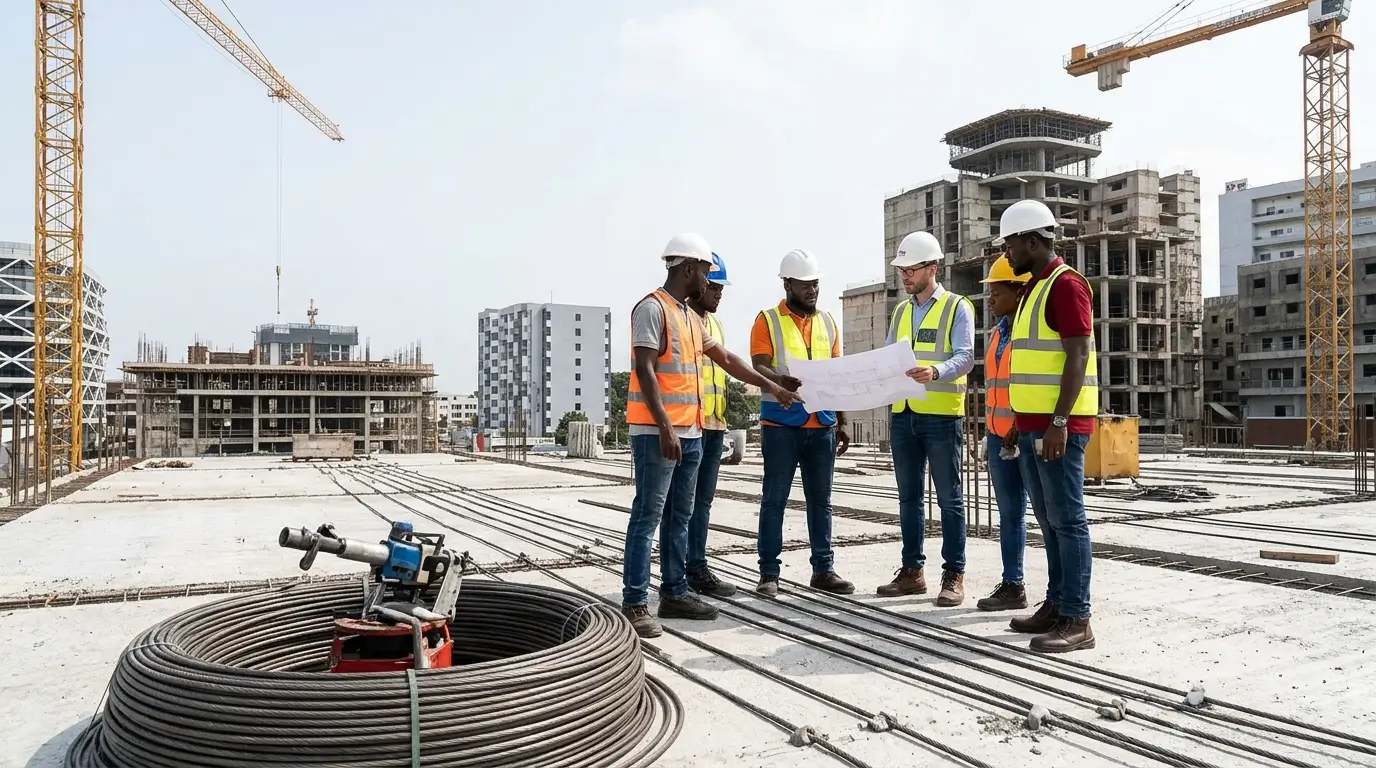
Post-tensioned (PT) concrete slabs are frequently proposed as a first-line answer to any span problem. In practice they earn their keep in a narrower set of conditions than the marketing suggests.
When PT wins
- Column grids above ~8.5 m in both directions
- Deflection-sensitive fit-outs (dance floors, MRI suites, glazed floor plates)
- Programme constraints where slab-cycle time is on the critical path
When it doesn’t
- Small footprints where the tendon layout and stressing sequence consume the schedule saving
- Frames with complex penetrations or late-stage services coordination
- Sites where the specialist stressing sub-contractor market is thin
The honest answer, in a room where the client is paying for the truth rather than a preferred outcome, is that a well-detailed conventional RC frame beats a poorly executed PT slab every time. The engineering job is to know which case is in front of you.
Continue the conversation
If a span problem on your project needs an honest answer rather than a preferred one, our engineering team runs this same conversation before any structural system is fixed.
Or call +233 500 903 792